Which findings are deal-breakers?
Anything tagged Walk on this site's checklist: active structural movement, a documented fire-hazard electrical panel, mud tubes or fresh termite damage, a surfacing septic system. These point at cost and risk that's hard to bound until a specialist actually evaluates it.
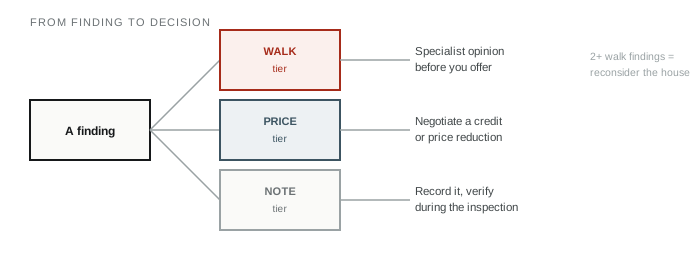
Which findings are bargaining chips?
Findings tagged Price: an aging roof or HVAC system, moderate corrosion on a water heater, cosmetic termite damage, a siding or gutter issue. These have real, boundable costs you can put a number to and negotiate around.
| System | Typical replacement cost |
|---|---|
| Foundation, structural | $5,200 avg, up to $30,000+ |
| Full roof replacement | $7,000 - $18,000 |
| Full HVAC replacement | $7,000 - $20,000 |
| Septic system replacement | $10,000 - $25,000+ |
| Whole-house repipe | $4,000 - $15,000 |
| Electrical rewire | $3,500 - $25,000+ |
How do you estimate repair costs before an offer?
Use the age and severity you found during the walkthrough against the cost ranges on this site's system guides, then lean toward the higher end of the range rather than the lower end. A rough, conservative estimate beats no estimate at all when you're deciding how to structure an offer.
You don't need a contractor's exact quote to write a smart offer. You need a defensible range and the judgment to know when a finding is common and cheap versus rare and expensive. That's what the rest of this site's guides are for, use them together rather than relying on this page alone.
When is a problem house still worth an offer?
When the price already reflects the work needed, or when you're prepared to negotiate a credit for it. The issue was never "needs work." It's work discovered after you've already committed emotionally and financially to the house, with no leverage left to account for it.
A house with three Price-tier findings and a listing price that already looks soft for the area can be a genuinely good deal. The same three findings on a house priced at the top of the market for comparable homes is a worse trade, even though the physical condition is identical.
How do you walk away without losing money?
Know your state's rules before you write the offer, not after. This is exactly what the due diligence fees guide on this site covers: some states protect your deposit through a contingency period, and at least one, North Carolina, uses a separate fee that isn't refundable even if you simply change your mind.
Questions buyers ask
- What is the most expensive problem to fix in a house?
- Foundation and structural work has the widest and highest range, from a few hundred dollars for a minor crack to $30,000 or more for full underpinning. Septic replacement and a full electrical rewire are the next tier, both capable of running well past $15,000.
- Can you negotiate the price after a walkthrough?
- Not directly, since a walkthrough finding isn’t a formal report. What it does is tell you whether a house is worth an offer at all, and what to specifically ask your professional inspector to look at closely once you’re under contract.
- How many houses do buyers view before offering?
- It varies widely, but narrowing a list faster by screening out obvious problems before you view in person, using the listing research from this site’s guides, means the houses you do walk through are better candidates to begin with.
- Is it worth offering on a house that needs work?
- Often, yes, if the price already reflects it or you’re prepared to negotiate a credit. The problem isn’t needed work, it’s needed work you didn’t know about until after you’d already committed.
Related checks
Cost figures summarized from this site's own roof, HVAC, structure, septic, plumbing and electrical panel guides; see those pages for full source citations. Figures are national averages current as of September 2026.