What can you learn from a listing before you visit?
The listed ages of major systems if they're mentioned, the seller disclosure document if it's already available, how long the home has actually been on the market, and its permit history through the city or county. All four are available before you ever schedule a showing.
This isn't just efficiency. Checking these first means your in-person time goes toward verifying and looking for what a listing can't show you, not discovering basic facts you could have had in advance.
What do seller disclosures have to tell you?
It depends entirely on the state. Every state bans actively hiding a known major defect, but the proactive disclosure requirement on top of that ranges from California's detailed, system-by-system Transfer Disclosure Statement to Alabama, which has no mandatory disclosure form at all.
Most states sit somewhere between those two, requiring disclosure of known material defects, things that would reasonably affect a buyer's decision or the price they'd offer: water damage, structural issues, environmental hazards, unpermitted work, known major nuisances. Read whatever disclosure document is available before the showing, not after you've already fallen for the kitchen.
What does a long time on market suggest?
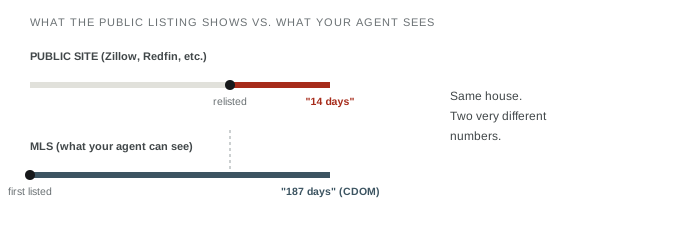
Maybe nothing, maybe something. The national average is around 66 days, but that number means different things in a fast market versus a slow one, and unique or high-end homes naturally take longer regardless of condition. Treat days on market as a clue that prompts a question, not a conclusion on its own.
How do you check a property’s permit history?
Search by address through your city or county's building department, many now have this online. You're looking for whether major work, roof replacement, additions, electrical panel upgrades, garage conversions, actually has a permit on file, especially for anything the listing photos suggest was recently done.
A mismatch between visible recent work and an absent permit record is worth asking about directly. It doesn't always mean something's wrong, but unpermitted work carries real downstream risk: financing difficulty, insurance disputes, and a lower appraised value than an identical permitted improvement.
What should you ask the agent before the showing?
Whether a previous contract on the house fell through and why, whether the seller disclosure is available yet, and the ages of major systems if they're not already listed. All three take one email and save real time during the visit itself.
Questions buyers ask
- Are sellers required to disclose known defects?
- In every state it’s illegal to actively and fraudulently hide a known major defect. Most states go further and require a proactive written disclosure of known material defects, though the strictness varies a lot, from California’s detailed Transfer Disclosure Statement to Alabama, which has no mandatory form at all.
- Can you see previous listings for the same house?
- Often, yes, through your agent or public listing history sites, even if the current listing shows a low days-on-market number. Public portals reset that counter when a home is relisted; an agent can usually see the fuller history through the MLS.
- What is an unpermitted addition worth?
- Less than an identical permitted one, and sometimes it creates real problems beyond value: insurance disputes, difficulty financing, or a requirement to bring the work up to code before it can be legally counted as livable space.
- How do you find out why a sale fell through?
- Ask your agent directly, they can often see prior contract history through the MLS even when it isn’t public. A previous deal falling through isn’t automatically a bad sign, financing and personal circumstances end plenty of contracts, but it’s worth asking rather than assuming.
Related checks
Seller disclosure law: Nolo, EffectiveAgents, DocJacket (50-state reference), Lawyers.com. Days on market: Redfin, HomeLight, Opendoor, Fast Expert 2026 data. This page describes general practice, not legal advice for a specific state or contract.