Why is creosote buildup dangerous, and why can’t you see it?
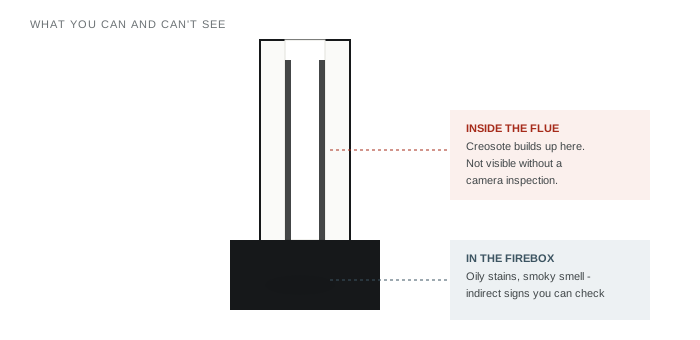
This is the one system on this whole site where the actual hazard is fundamentally out of view. Every check on this page is an indirect signal, not a direct look at the thing that matters. That's worth sitting with for a second: nowhere else does this site ask you to trust a smell or a stain as much as it does here.
What warning signs can you actually check during a showing?
Dark, oily stains inside the firebox, a strong smoky smell even when no fire is burning, and visible cracks in the exterior brick or the chimney crown. None of these confirm the actual creosote level, but all three are worth asking about directly.
| What you notice | What it means | Typical cost | Verdict |
|---|---|---|---|
| Dark oily stains inside the firebox | Creosote residue, a fire risk that’s otherwise invisible higher in the flue | Sweep $130 - $380 | price |
| Strong smoky smell even when not in use | Creosote buildup or a draft problem in the flue | Level 2 inspection $200 - $500 | price |
| Visible cracks in the exterior brick or the crown | Water intrusion point; can worsen quickly through freeze-thaw | $200 - $850 for tile/mortar repair | price |
| No sweep or inspection history the seller can provide | Unknown creosote level and structural condition | Get a Level 2 inspection before use | walk |
| Smoke entering the living space when a fire is lit | Draft or blockage problem, needs diagnosis before further use | Varies with cause | walk |
What does a chimney inspection involve?
A basic sweep clears creosote and debris and runs $130 to $380. A more thorough Level 2 inspection, the kind appropriate for a real estate transaction, uses camera footage to check the interior of the flue and runs $200 to $500.
What does chimney repair cost?
Minor flue tile cracks run $65 to $100 per square foot. A full liner replacement runs $900 to $7,000 depending on material and chimney height. Overall chimney repair averages around $2,500, with a typical range of $1,000 to $5,000.
What does a Level 2 chimney inspection cover?
The roof-level chimney structure, the firebox, the flue lining and the damper, checking for cracks in the brick or flue tiles, moisture or mold, blockages, carbon monoxide leak paths, creosote buildup, water damage, and evidence of previous fires.
If a house has a fireplace that's clearly been used, get a Level 2 inspection during your option period unless the seller can produce a recent one. Buyers who skip this have ended up owning a chimney requiring a full rebuild within a year of closing, a genuinely expensive surprise for a system this site can only partially check from the outside.
Questions buyers ask
- Do all fireplaces need a chimney sweep before use?
- If there’s no documented sweep or inspection within the last year and the fireplace was actually used, yes. Creosote builds up invisibly inside the flue, and there’s no way to confirm a safe level without a professional looking at it.
- Is a gas fireplace safer than a wood-burning one?
- Gas fireplaces don’t produce creosote, which removes that specific fire risk, but they carry their own inspection needs around venting and gas line condition that this page doesn’t cover in depth.
- Can you use a fireplace that hasn’t been inspected?
- You can, but it’s a real risk given how invisible creosote buildup is. A Level 2 inspection, the kind typically done for a real estate transaction, costs $200 to $500 against a chimney fire risk that’s genuinely dangerous.
- Does a damaged chimney affect a home’s value?
- It can, both directly through repair cost (often $1,000 to $5,000) and indirectly, since a visibly neglected chimney raises questions about how well the rest of the home’s maintenance has been kept up.
Related checks
Cost figures: Angi, HomeGuide, Hammerio, ProjectCostPro and GMT Home Services 2026 chimney pricing guides. Creosote risk information: Bob Vila, Valley Chimney, A-1 Chimney, Priddy Chimney. Figures are national averages current as of September 2026.