How do you know whether a house is on septic?
Ask directly, and check for a raised or slightly mounded rectangular area in the yard away from the house, sometimes with a visible access lid. In rural and semi-rural areas without visible municipal sewer connections, assume septic until you confirm otherwise.
What visible signs indicate a failing septic system?
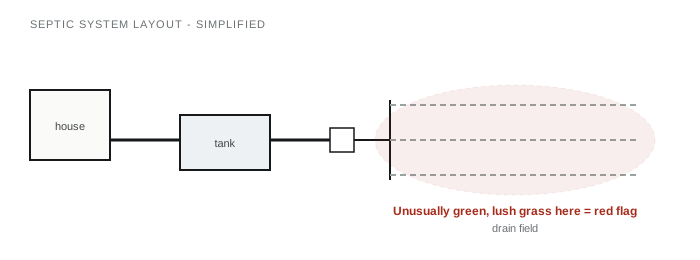
Slow drains throughout the whole house, standing water or a soggy patch over the tank or drain field, gurgling pipes, a sewage smell outside, and, genuinely, an oddly lush and green patch of lawn where the field sits.
| What you see | What it means | Typical cost | Verdict |
|---|---|---|---|
| Slow drains at every fixture in the house | Early septic warning; not yet clear if tank or drain field | Pumping $300 - $600 as a first step | note |
| A drain backup that returns within a month or two | Usually a drain field problem, the expensive half of the system | $8,000 - $15,000 to replace the field | walk |
| Standing water or a soggy patch over the tank or field | System is surfacing, likely failing | $10,000 - $25,000+ full replacement | walk |
| An unusually lush, green patch of lawn in one area | A literal fertilizer effect from a leaking or surfacing system | Get a functional inspection before offering | price |
| Gurgling pipes or a sewage smell | Pump malfunction or early field failure | $300 - $7,000 depending on cause | price |
The green-grass sign isn't folklore, waste from a surfacing or leaking system genuinely fertilizes the ground directly above it. It's one of the few findings on this entire site you can spot from thirty feet away without any tool at all.
Which septic records should you ask for?
Pumping history and dates, the system's age and permit record, and the tank and drain field's location on the property. A system with no pumping history at all is a bigger unknown than an old system with a documented, regular maintenance record.
What does a septic system replacement cost?
A full system, tank and drain field together, runs $10,000 to $25,000 or more. If only the tank needs replacing and the drain field is intact, that drops to $3,000 to $7,000. The drain field alone, usually the more expensive half to fail, runs $8,000 to $15,000.
Material and labor costs for septic work specifically have risen 15 to 25% since 2020 according to contractor pricing data tracked by the National Association of Wastewater Technicians, so lean toward the higher end of any of these ranges when budgeting rather than the lower end.
Who should inspect a septic system?
A licensed septic inspector, not a general home inspector. A proper inspection includes locating and opening the tank, checking sludge levels, and often a dye test to confirm the system is actually containing wastewater rather than bypassing it. This is a specialty inspection, not something to skip on a septic property regardless of how the yard looks.
Questions buyers ask
- How often does a septic tank need pumping?
- Roughly every 3 to 5 years for an average household, though household size and tank capacity shift that. Pumping itself costs $300 to $600 and is routine maintenance, not a sign anything is wrong.
- How long does a septic system last?
- A well-maintained tank can last 25 to 40 years, but the drain field is usually the limiting factor and can fail sooner, especially without regular pumping or if it was undersized for the household.
- Can you get a mortgage on a house with a failing septic?
- It’s difficult. Most lenders require a passing septic inspection, and a known-failing system typically has to be repaired or replaced, or its cost negotiated into the deal, before closing.
- What is a septic dye test?
- A colored dye is flushed into the system, and an inspector checks whether it surfaces in the yard or drain field, which confirms the system is actually containing and processing wastewater rather than leaking or bypassing it.
Related checks
Cost figures: Angi, SepticSeeker, SepticTankHub and Communities U 2026 septic pricing guides, including National Association of Wastewater Technicians contractor pricing data on the 2020-2026 cost increase. Figures are national averages current as of September 2026.