When does a house actually need a sump pump?
When the property's water table, grading, or drainage conditions push groundwater toward the basement or crawl space. It's not a universal system the way a roof or an electrical panel is, it's conditional on the specific site, the same way septic and well systems are.
How do you test whether a sump pump works?
| What you see | What it means | Typical cost | Verdict |
|---|---|---|---|
| Pump doesn’t activate when water is poured into the pit | Pump has failed or is failing right now | $400 - $1,200 to replace | walk |
| No battery backup installed at all | No protection during a power outage, when flooding risk is often highest | $400 - $1,000 to add | price |
| Backup battery is more than 5 years old | Lead-acid batteries degrade predictably with age regardless of symptoms | Battery replacement, a fraction of full backup cost | note |
| Corrosion or swelling on the battery case | Battery is failing and may not work when actually needed | Battery replacement | price |
| Rust or heavy mineral buildup on the pump itself | Age and heavy use; may still work but is closer to failure | Budget for replacement soon | note |
Why does the battery backup matter more than the pump itself?
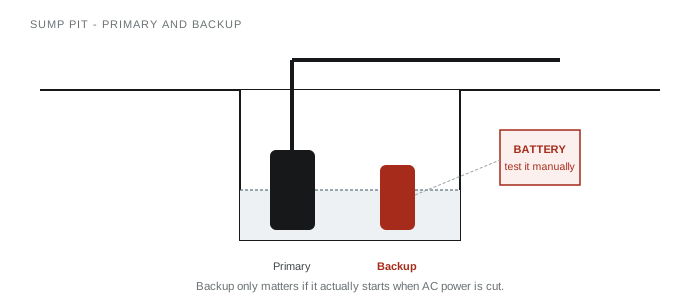
Because heavy storms are exactly when power outages happen, and a sump pump without backup power stops working at the precise moment it's needed most. A pump with no functioning backup is, in a practical sense, only half a system.
Test the backup specifically, not just the pump. Unplug the main power and confirm the backup starts on its own. A battery that's more than 5 years old is worth flagging even without an obvious symptom, since lead-acid batteries degrade in a predictable, age-based way that a quick visual check won't catch.
What does sump pump replacement cost?
A like-for-like pump replacement runs $400 to $1,200, averaging around $650. Adding battery backup to a system that doesn't have one runs $400 to $1,000 more. A full new installation, including digging a pit where none exists, can exceed $2,500.
What does a sump pump’s presence tell you about the property?
That someone, at some point, decided the property needed one, which is itself useful context. Ask directly why it was installed and whether it runs frequently. A pump that activates constantly points at a real, ongoing water table or drainage issue worth understanding before you buy, not just a cautious previous owner.
Related checks
Questions buyers ask
- How long does a sump pump last?
- Roughly 7 to 10 years for the pump itself under normal use, though this varies with how often it actually runs. A pump in a high-water-table area works much harder than one that rarely activates.
- Does every basement need a sump pump?
- No, it depends on the water table, grading, and local drainage conditions specific to the property, not on having a basement at all. Plenty of basements never need one; others would flood without it.
- How do you test a battery backup without a power outage?
- Most systems have a manual test mode, or you can simply unplug the main AC power supply and confirm the backup pump activates on its own. If it doesn’t start, the backup isn’t functional regardless of how new the battery looks.
- What happens if a sump pump fails during a storm?
- Water that the pump would normally remove backs up in the pit and can flood the basement or crawl space, often during exactly the weather event the system exists to handle, which is why battery backup matters as much as the primary pump.
Cost figures: Angi, Four Seasons Heating/Cooling/Plumbing, Vanderbosch, The Basement Guide, Mr. Pipey 2026 guides. Battery backup failure signs: BatteryClerk, Sump Pump Gurus, WaterCommander. Figures are national averages current as of September 2026.