How do you test water pressure and drainage at a showing?
Turn on two fixtures at once, a shower and a sink, and see if pressure drops noticeably at either. Then run water for a minute and watch how fast it drains. Both are quick, non-invasive checks that catch real problems most buyers skip.
Weak pressure at every fixture usually points at the municipal supply or the main line into the house. Weak pressure at specific fixtures, especially ones farthest from where the water enters, points at internal corrosion restricting flow inside old pipes. That distinction matters, because one is a house problem and the other might not be.
Slow drainage in multiple fixtures at once suggests a main line issue, potentially expensive. Slow drainage in just one sink is far more likely a simple clog. Run the water, watch it drain, and note which fixtures are slow rather than just whether the house "has good water pressure" in general.
How do you identify the supply pipe material?
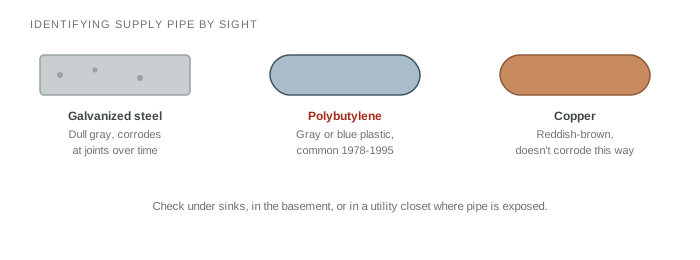
Look at exposed pipe under sinks, in the basement, or in a utility closet.
| What you see | What it means | Typical cost | Verdict |
|---|---|---|---|
| Gray or bluish plastic pipe (common 1978-1995) | Likely polybutylene; most insurers flag or deny coverage on it | $4,500 - $15,000 to repipe | walk |
| Dull gray metal pipe with visible corrosion at joints | Galvanized steel, corrodes internally over 40-60 years | $4,000 - $15,000 to repipe | price |
| Rust-colored or cloudy water from taps | Internal pipe corrosion, most often galvanized | Repipe cost above, or isolate to one fixture | price |
| Uneven water pressure between fixtures | Mineral buildup restricting flow, worse furthest from the main | Varies; may resolve only with repipe | note |
| Staining or soft flooring under sinks or the water heater | Past or active leak | Varies by source and extent | walk |
Which pipe materials are a known liability?
Polybutylene is the one that goes beyond a maintenance issue and into a financing issue. Most insurance carriers flag or deny coverage on homes that still have it in service, separate from whether it's currently leaking.
Galvanized steel is a different kind of problem, a slow one. It corrodes from the inside over 40 to 60 years regardless of how the water looks today, so a home with original galvanized supply lines is carrying a repipe cost that's coming eventually. The question isn't whether, it's when, and "when" is worth asking about directly if you can't tell the age of the plumbing any other way.
Raw pipe material costs rose roughly 8% since 2025, with upward pressure still active as of this writing. Budget a 10% contingency over any single quote you get for repiping, since this is a moving number, not a fixed one.
What are the signs of a hidden leak?
Staining or soft, slightly spongy flooring under sinks, near the water heater, or in a basement are the clearest signs. A musty smell in a specific area, even without visible staining, is also worth following up on.
Open the cabinet under every sink you pass and look at the floor of the cabinet itself, not just the pipes. Warped particleboard or a dark ring on the cabinet floor often shows up before any staining makes it to the visible flooring outside the cabinet.
What does repiping a house cost?
A whole-house repipe runs $4,000 to $15,000 for a standard 2 to 3 bedroom home, with the material driving most of the range: PEX runs $4,000 to $10,000, copper runs $6,000 to $15,000 or more.
PEX is the material most repipe jobs use today, it costs less than copper and performs well, though some buyers still specifically ask for copper. Either way, get the quote itemized by material and labor before treating a single number as gospel, since the range here is wide enough that "repiping costs $10,000" isn't a useful number on its own.
Questions buyers ask
- Are galvanized pipes a deal-breaker?
- Not automatically, since many still function, but they corrode internally over 40 to 60 years regardless of how the water looks today. A house with original galvanized supply lines is carrying a repipe cost eventually, whether that’s this year or in ten.
- What is polybutylene pipe and why does it matter?
- A gray or blue plastic pipe used widely from 1978 to 1995 that’s prone to failure at the fittings and can leach chemicals into the water. Most insurers flag or deny coverage on homes that still have it, which makes it a financing issue as much as a plumbing one.
- How do you find the main water shutoff?
- Usually in the basement, crawl space, garage, or a utility closet where the main line enters the house, and in warmer climates sometimes outside near the street. Knowing its location before you own the house is worth confirming during a showing.
- Does low water pressure mean bad plumbing?
- It often means mineral buildup restricting flow inside old pipes, more common with galvanized steel, but it can also be a municipal supply issue unrelated to the house itself. Uneven pressure between fixtures, not just low pressure everywhere, is the stronger signal.
Related checks
Cost figures: Angi, HomeGuide, Geek Powered Studios and plumbingpriceguide.com 2026 repiping data, including the polybutylene-specific cost breakdown from CostHelper and repipe.com. Insurance treatment of polybutylene per Angi and HomeGuide. Figures are national averages current as of September 2026.